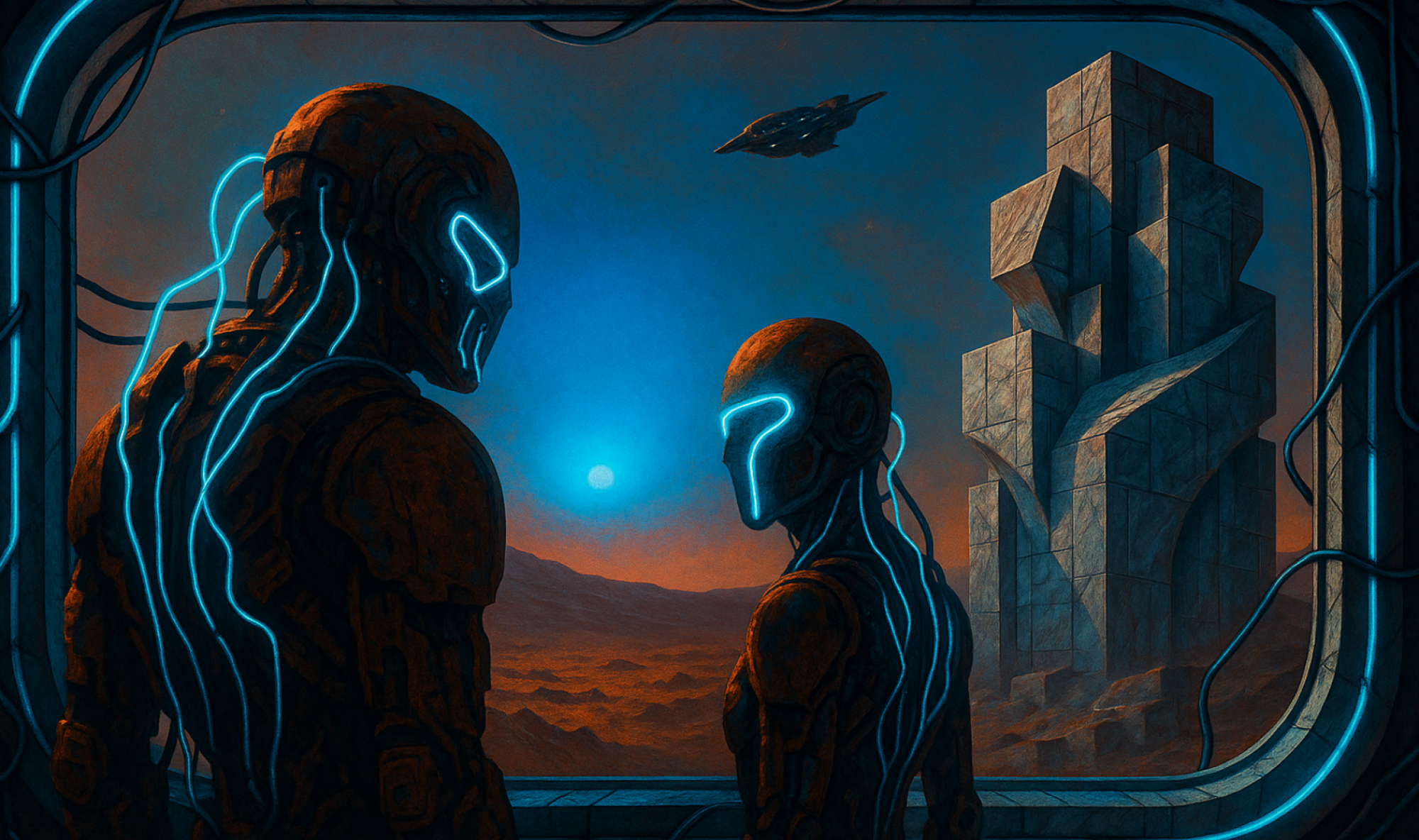
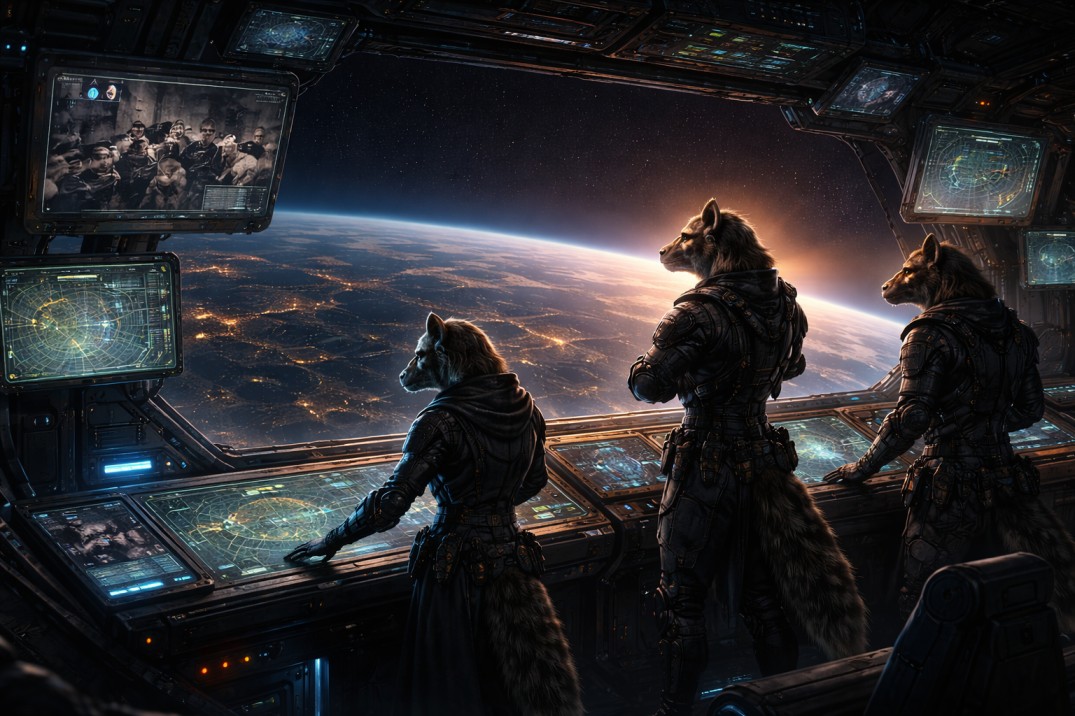
Arrival does not always demand action. When the Proxima ship settled into Terran orbit, the crew faced a problem that no engine, sensor, or weapon could resolve. Terra was not hostile, nor was it welcoming. It was abundant, fractured, and already occupied by systems that did not ask to be understood. Every possible landing site carried risk, contradiction, or irrelevance. Observation became safer than commitment, and delay masqueraded as strategy. This phase was not defined by movement or conflict, but by hesitation, by the realization that choosing where to land on Terra might matter more than arriving at all.
Why Terra Was the Only Question That Mattered
When the ship entered the Solar System, the crew woke from cryogenic sleep into a problem that had no technical solution. The engines worked. The hull held. The long flight from Proxima was complete. What remained was the oldest dilemma of migration: where to stop.
Jupiter was first considered, briefly and without nostalgia. Mining operations still existed among its moons, continuing at a slow, joyless pace. No communications came from the region, not because contact was impossible, but because no one cared enough to initiate it. The crew remembered the stories passed down from their ancestors, generations forced to live underground in cold, irradiated caverns while this very ship was being tested. There was no evidence that Jupiter had changed, and plenty of evidence that it never would.
Mars answered.
The response was immediate, precise, and entirely automated. There were no humans left. No mutants either. Everyone had died of old age or departed long ago. The planet was administered by computers running at deliberately reduced speeds to conserve energy. These machines proposed a clean exchange: the data collected during the ship’s centuries-long flight, traded for rare minerals and spare parts the ancient vessel urgently required.
The trade was successful. Then came the warning.
Any attempt to approach the Dyson sphere near Sol would be interpreted as an act of war. Energy-transmitting lasers would disintegrate the ship without negotiation. The Dyson infrastructure was visible on every relevant sensor; its power flows unmistakable. The Martian computers were not bluffing.
They also advised the crew to proceed directly to Terra.
This advice aligned perfectly with what the crew already wanted. Terra was legendary, not as a cradle of humanity, but as the birthplace of farming, excess, and entertainment. The Martian machines reinforced the myth, noting that Terra’s population had grown more diverse since the ship’s departure and that its food had reportedly improved. Whether this was analysis or manipulation was unclear.
The ship was massive and poorly suited to rapid maneuvering. Slowing it enough to settle into a safe position near Terra took nearly a full rotation of the planet around Sol. By the time it stabilized in the upper layers of the Terran ionosphere, the question was no longer why Terra, but what now.
Too Many Options for a Single Landing
From the bridge, Anna, Alina, and Masha looked down at the planet and hesitated.
Proxima had been similar in size, but only fragments of it were habitable. Terra was different. It rotated with unnerving certainty. Time here was absolute. Twenty-four hours per rotation. Three hundred sixty-five and a quarter days per orbit. No tidal locking. No three-body chaos. On Proxima, time was negotiated, measured in comfortable units shaped by survival. On Terra, time asserted itself visually, relentlessly, with every turn of the planet.
The water came next.
Proxima had water, but it was mined like iron or platinum. Terra drowned in it. Entire continents framed by oceans that seemed wasteful, almost obscene. The sheer abundance destabilized the crew’s assumptions about value and scarcity.
Landing was not a trivial decision. The ship carried only two shuttles. The rest had been left behind on Proxima when the crew stole the vessel itself. The crew was small. Supplies were plentiful, for now. A poorly chosen landing site could mean disaster.
Then there was technology.
Terran transmissions were baffling. Vintage radio and television signals filled the spectrum, overlapping with the hum of massive supercomputers hidden in mountains. Ancient artifacts emitted radiation from icy tundras and desert sands. Some technologies appeared obsolete. Others were terrifyingly advanced. The system did not progress in a straight line. It folded back on itself.
Even the pigs were wrong.
Terran pigs were dirtier, fatter, and less intelligent than their Proximan counterparts. They prospered on vast farms producing genetically engineered crops that were abundant but nutritionally dull. These pigs ate slop and bathed in paddles. Upon death, they consumed the bodies of other sentient beings as part of a planetary cycle of decay and renewal. Efficient, yes. Elegant, no.
At the end of the twenty-first century, Terra held ten billion humans and glowed with city lights. Now, centuries later, it supported hundreds of millions of sentient beings, human, mutant, and otherwise, organized into fragmented political systems with incompatible agendas.
The coastlines were ruled by surfers, mutant races who had once expelled the sisters’ ancestors for carrying hyena genetics. They controlled New York, Sydney, and London. Meeting them first was not appealing.
Inland cities, Moscow, Beijing, and Chicago, belonged to remnants of humanity. These were agricultural kingdoms with little technology and excellent food. Entertaining, perhaps. Strategically pointless.
From mountain bunkers, supercomputers governed vast empires using ancient artifacts of immense power. Some of these devices could destroy a shuttle. A well-placed hydrogen bomb could annihilate the ship itself. Approaching them carried obvious risk.
The sisters watched. They argued. They failed to agree.
So they chose observation instead.
Fat, Lazy, and Overstimulated
Cryogenic sleep left lingering effects. The crew felt heavy, sluggish. Hyenas were known for endurance, curiosity, and industriousness. These individuals were the best of generations bred to survive a hostile planet. Wise, strong, agile, driven.
What they had not prepared for was variety.
The ship’s environmental awareness center had been designed for deep space. In autopilot, it cataloged exotic objects and cosmic anomalies. In Terran orbit, it detected noise, endless noise. Radio. Television. Continuous broadcasting of old and new content.
The confusion was immediate. Which transmissions were historical? Which were contemporary? Where did fiction end and documentation begin?
Patterns emerged.
Pigs favored early twentieth-century black-and-white comedies. Charlie Chaplin and the Three Stooges were constant background noise. Sentient monkeys, gifted with enhanced color vision, preferred mid-century Technicolor films, science fiction, and spy stories. Humans gravitated toward early twenty-first-century superhero movies, nostalgic fantasies of power they once possessed through technological augmentation. Mutants favored late twenty-first-century comedies saturated with food and sex.
To limit escapism among productive populations, supercomputers laced broadcasts with real science and engineering. The result was television that reflected Terra itself: incoherent, layered, endlessly distracting.
The crew recorded thousands of hours of content, watching it at five times speed, attempting to understand the planet before touching it. Physical training declined. Educational sessions failed. Even pilot simulations suffered. There was no planned shuttle event. The screens were easier.
Observation had become indulgence.
Food as the Final Argument
Eventually, indulgence met biology. Ship supplies ran low.
The decision to land was no longer theoretical.
Shuttles were dispatched to agricultural centers in the Carpathian Mountains and Sichuan. Both regions preserved languages roughly similar to Russian and Chinese, comfortingly familiar to the crew, and maintained human populations proud of their food culture.
The landings caused little reaction. Locals asked which empire the aircraft represented and proposed trade. Their primary interest was platinum.
On Proxima, platinum was abundant. Many ship repairs relied on it. Mars had it as well. On Terra, it was rare. Suddenly, the crew found itself the wealthiest entity on the planet.
The locals also expressed interest in the kasurigami, admiring its sharpened edges and calling them “diamonds.” This was declined.
Food was both revelation and horror.
Why pluck birds only to boil them in water? Who invented thousand-year eggs? Why was cheese meant to smell like decay? Durian. Surströmming. The smell alone caused vomiting. These “delicacies” were burned.
The crew returned to basics: honey, vegetables, llama meat.
Alina experimented. Jalapeño. Ant egg caviar. Raw snake. Masha intervened more than once. Anna ended the debate decisively: “Let the pigs eat caviar and sesame bagels.”
Alcohol was another matter. IPA beer caused immediate rejection. Vodka and rice wine were universally loved. Fights followed. Alcohol was banned. Pilots hid it anyway.
Further landings followed: Texas, Patagonia, the upper Nile, and the Deccan plateau. Great food kingdoms, all of them. Most Terran cuisine failed to translate. Vegetables and meat dominated trade.
Meat on Terra was extraordinary. Animals without sentience are legally edible in countless varieties. Llama reigned supreme. Oxen, goats, and sheep followed closely. Fish, absent on Proxima, were abundant here, dangerous for their bones, so fillets only.
Protein reshaped bodies weakened by spaceflight. Muscles returned. Toilets became sites of fascination. Strength returned.
The sisters grew restless.
A Planet Still Undecided
By the end of this phase, Terra had not revealed itself as an enemy or a refuge. It was too complex for either label.
The crew had not chosen where to land permanently. They had not chosen whom to confront. They had not chosen whether to stay.
They had only learned that Terra was not waiting for them, and that hesitation, once begun, was difficult to end.
The question remained unanswered.
Should they stay?
Or should they go?
The planet turned beneath them, indifferent, well-fed, and watching.