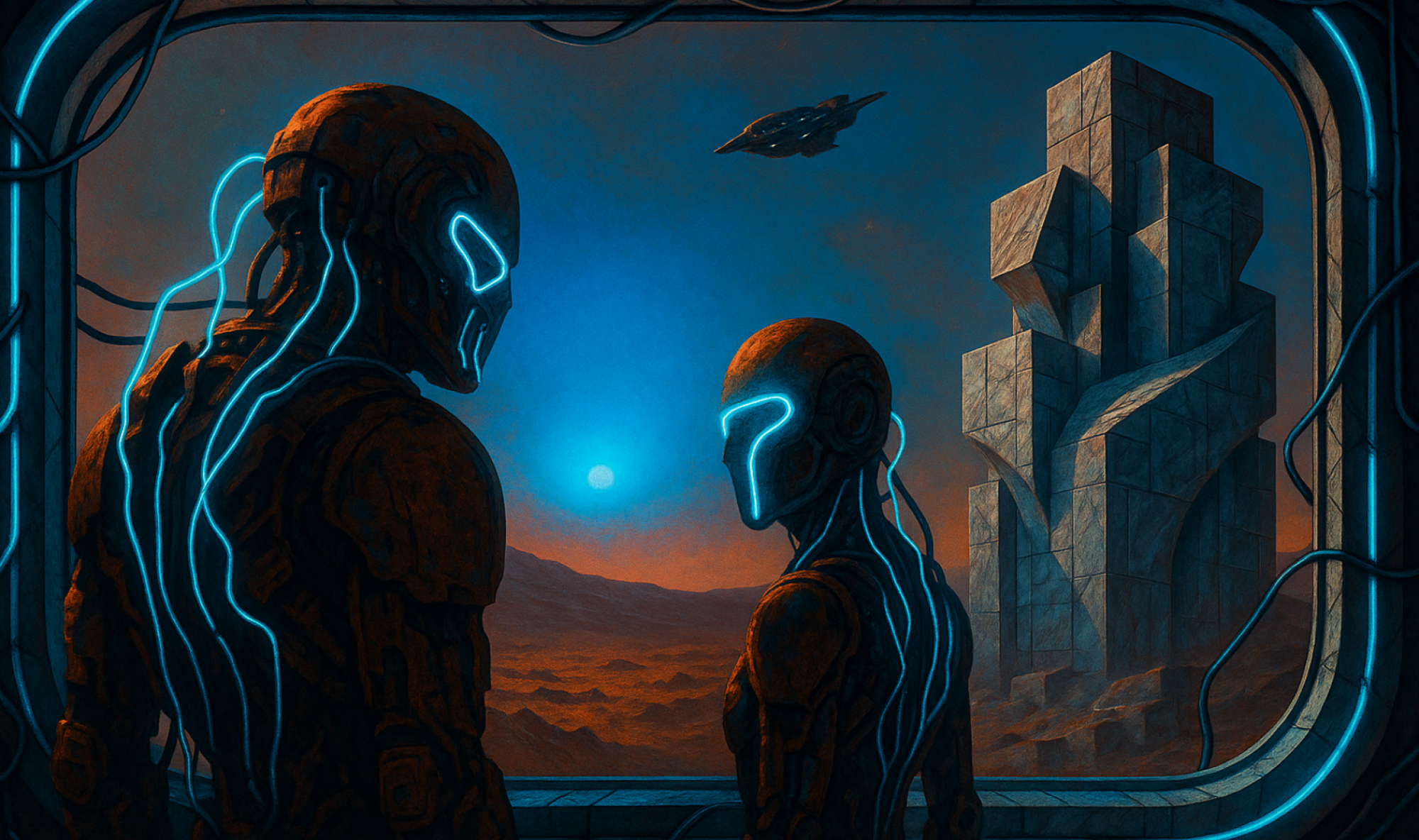
Ganymede is not a place that welcomes you. It is a place that charges you for arriving, and then charges you again for staying. The cold is constant, the light is thin, and the outposts feel like they were built to argue with physics. In the Trials, Ganymede is where the cadets stop pretending the danger is only external. Debris, storms, and bad burns are visible. What Ganymede reveals is the invisible damage: resentment, guilt, loneliness, and the quiet ways a system breaks people and calls it “work.”
The Ganymede station sequence puts the cadets into contact with independent miners, men and women who live outside corporate discipline and outside the comfort of official rules. They are not heroic. They are not polite. But they are honest in a way that terrifies anyone still holding onto clean stories about merit and justice. On Ganymede, the ice does not just hide broken equipment. It hides broken lives.
Why Ganymede Breaks People Faster Than Space
On paper, Ganymede should be simpler than the Belt. There is structure here. There are stations. There are docks, schedules, supply chains, medical locks, and a surface culture that can be mapped. But the moon’s physical stability is deceptive. The crust shifts. The cold turns small problems into fatal ones. Systems fail slowly and then all at once. And because the environment is harsh, the social order becomes harsher.
The corporate miner crews, trained, fused into regulated routines, backed by money and compliance, treat risk like a managed asset. Independent miners do not. They treat risk like weather: it comes, it takes what it wants, and you live only if you stay stubborn. That difference changes how they speak. Corporate culture rewards controlled language. Independent culture rewards truth that hurts, because pain is cheaper than denial.
So when cadets arrive at a station like Ridge-Nine, they are not stepping into a lesson about piloting. They are stepping into a confrontation with the cost of the Solar System’s “functioning.” Ganymede is where the polite layer comes off.
The Ridge-Nine Confrontation: When Someone Names Your Fear Out Loud
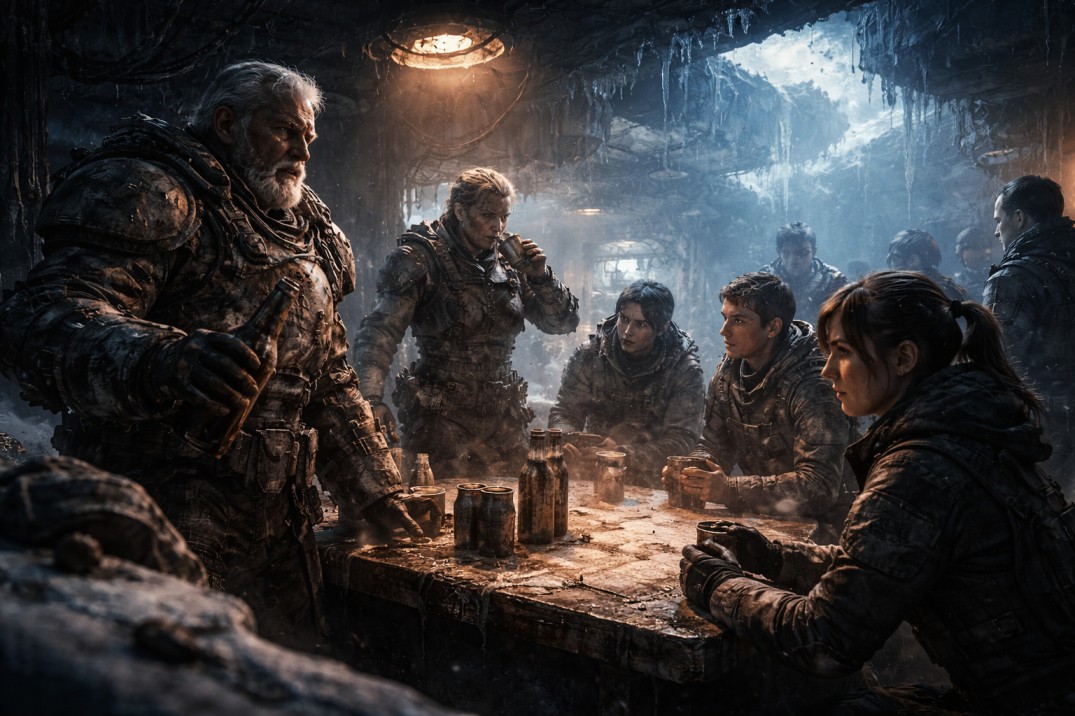
The first Ganymede encounter is not a rescue. It is an interrogation dressed as hospitality. Independent miners gather the cadets and speak to them the way the vacuum speaks to a cracked seal: directly, without mercy, and without interest in your self-image.
The miners do not insult randomly. They aim at the fault lines. Andrea is identified not as a pilot or a competitor but as pain held inside discipline. Nicholas is seen as a man fleeing a history he can’t reconcile. Jason is treated as corporate muscle with a private crack in the armor. Samson is labeled as an outsider body in an environment that does not respect bodies. Ochoa, whose identity rests on signal and certainty, is pushed toward the possibility that data can lie by omission.
Sahar receives the harshest attention because she represents the thing independents hate most: oversight with teeth. She does not argue because she understands something important. These miners are not simply angry at cadets. They are angry at the illusion that the system is fair, or even stable. Their hostility is not personal. It is accumulated.
This is what makes Ridge-Nine dangerous. Not fists. Not weapons. Words. The pressure of honesty can rupture people faster than shrapnel because it attacks the internal supports, pride, purpose, and the belief that your suffering “means” something in a clean way. Ridge-Nine forces the cadets to look at themselves without the protective haze of competition.
The Potín Night: How a Broken Community Keeps Itself Human
Then the scene turns, and it matters that it turns.
The miners do not end the confrontation with punishment. They end it with a ritual. They drink. They distribute a brutal, illegal liquor like medicine. Not because intoxication solves anything, but because it changes the room’s physics. It lowers the pressure. It gives everyone permission to be human for a few hours without losing face.
The way the cups are handed out is the real structure of the night. Each cadet receives a reason. Fear, pain, guilt, faith, exile, unwanted truth. The miners don’t say, “We forgive you.” They don’t say, “We respect you.” They say something more useful: we see the weight you carry.
That is why the song matters too. The shanty is not entertainment. It is a social technology. In a place where people die alone, singing becomes a public refusal of isolation. The chorus isn’t sentimental; it’s functional. It reminds them that survival is not only thrust and vector. It is also a belonging, even a temporary belonging.
The Splintered-Metal Operation: Competence Under Pressure
After the station, the work becomes concrete. A wreck-cloud hangs near Ganymede’s horizon, torn plating, cracked containers, dying engines, and an ore mass drifting like a weapon. It is exactly the kind of disaster independents inherit: no clean corporate safety perimeter, no redundant escort ships, no calm authority to coordinate response.
The cadets’ job is not to “win.” It is to stabilize a dynamic mess without making it worse.
This kind of operation exposes leadership in a way exams never do. Andrea brings structure. Ochoa brings urgent modeling and risk framing. Joseph reads systems like puzzles and becomes useful when speed meets complexity. Jason moves like a miner, instinctive with mass, comfortable with danger, decisive when people freeze. Sahar controls human chaos because she has spent her life learning that panic spreads like fire.
But the key insight is that the operation only succeeds once the miners allow it to succeed. That’s where Mara becomes central. In the middle of metal and force, she uses something that doesn’t show up on any telemetry panel: reassurance. She gets Shale to accept help by speaking to him as a person instead of a problem. That is not softness. That is a strategy.
The crisis peaks the way these things usually do: one mistake by someone young. A cadet overcorrects, clips debris, spirals toward catastrophe. The miners respond first because they live with consequences. And Jason’s tether, simple, ugly, effective, becomes the difference between a disqualification and a death.
The lesson is professional and cruel: in hard environments, competence is not elegance. It is the ability to prevent a chain reaction when elegance fails.
Why the Miners Gather Around the Nurse
After the technical risk passes, something stranger happens: the independent miners do not reward the person who pulled the tether, or the person who ran the calculations, or the person who issued commands. They gather around Mara.
It is easy to misread this moment as sentimental. It isn’t. It is an indicator of what long-term exposure to machinery and isolation does to human beings. When you live inside armor, literal or social, you start to forget what ordinary contact feels like. You start to treat touch as either violence or an accident.
So when a miner asks for a simple pat on the cheek, what he is really asking is proof that he still exists as a person under the scars and metal. The miners are not begging. They are re-learning a language that their lives forced them to abandon. Mara’s role is not romance or comfort. It is a restoration of a basic human interface.
That is why the closing point lands. Saving ships is visible work. Saving people who forgot they needed saving is invisible work. Ganymede makes the invisible visible.
What the Ice Actually Hid
Ganymede did not teach the cadets a new navigation trick. It taught them the cost of pretending the Solar System runs on clean rules. The independent miners were the proof that systems can function while still being unethical, that survival can be purchased with humiliation, and that resentment is often just grief that never got processed.
Ridge-Nine stripped the cadets down with truth. The wreck-cloud tested whether they could act without ego. And the quiet line of miners asking for human contact showed the most serious damage of all: people can survive everything and still lose the part of themselves that feels connected. On Ganymede, the ice hid broken things, until one night, under bad heat and worse liquor, everyone admitted they were broken too, and kept going anyway.